
Find Little Rock Residents
Start any Little Rock residents directory search with the question, not the database. Ownership points to the Pulaski County Assessor. Court matters point to Search ARCourts. A family link may run through probate, a marriage license, an obituary, or a historical directory. No single source is a complete household roll. Renters, relatives, and other occupants can be missing from the parcel card, while the named taxpayer receives mail somewhere else entirely.
Begin narrow. Save each stable identifier as you go. A parcel number, case number, instrument number, or exact directory year separates one person from a namesake. Then confirm the result in an independent record. Two sources matter in a city of repeated names and several record keepers.
- Search the county property roll by the known name or street address.
- Record the situs address, parcel number, owner name, and any distinct tax-mailing address.
- Use Arkansas VoterView only to verify a specific voter's own registration details.
- Check deed, court, probate, or business indexes that fit the purpose.
- Move to Roberts Library, the clerk counter, or an Arkansas FOIA request when the web trail stops.
Little Rock Records Custodians
Little Rock serves as both the Pulaski County seat and the Arkansas capital. Several key custodians sit close together. The Circuit and County Clerk brings real-estate records, circuit files, and probate together with marriage licensing and elections. All of it sits in one office. The assessor maintains the property roll. Arkansas Vital Records runs its statewide counter inside the city. Each office answers a different slice of a residents directory search. Each also stays the authority for copies and corrections.
Pulaski Circuit and County Clerk
401 W. Markham St.
Little Rock, AR 72201
501-340-8500
Clerk records and departments
Arkansas Vital Records
4815 W. Markham St.
Little Rock, AR 72205
Weekdays, 8:00-4:30
Clerk counters open weekdays from 8:00 to 5:00. Assessor hours run 8:00 to 4:30. Call ahead before a research trip, since an older deed book, archived case, or certified copy may take time to retrieve.
Search Little Rock Property Records
The Pulaski County Assessor property search is the strongest first stop when you know an address. The office keeps more than 170,000 taxable real-property accounts. It states that all county real-estate records are online. A result can show owner or taxpayer, parcel ID, situs address, subdivision or legal description, values, building traits, map geometry, and sale references. It does not name every resident.
| Search choice | Input | Best use | Reading caution |
|---|---|---|---|
| Owner Name | Person, trust, or entity | Find parcels tied to a known owner | Try initials and name variants |
| Property Address | Situs address | Anchor a Little Rock location | Drop units or directionals if needed |
| Parcel Number | Exact county identifier | Return to the same land | Most precise key |
| Subdivision | Legal or subdivision name | Explore a platted area | Not the same as a ZIP or neighborhood |
The manifest capture below comes from the official Pulaski County property lookup.

Its owner, address, and parcel routes aid discovery. A parcel card still proves tax and title facts, not who sleeps at the address.
Little Rock's Two Address Clues
Every parcel carries a situs address and may carry a different taxpayer mailing address. The situs marks the land itself. The mailing field shows where assessment notices go, so matching addresses can support an owner-occupancy theory while different ones suggest an absentee owner, trust, company, or billing preference. Neither result confirms every resident.
- Parcel
- A mapped unit of land with a county identifier.
- Situs address
- The physical place assigned to the parcel.
- Index
- A finding aid that points to a record; it is not always the record image.
- Criss-cross directory
- A later city directory arranged by address before occupant name.
That distinction keeps any Little Rock residents directory honest. Follow the parcel to deeds for ownership. Then use lawful resident evidence for occupancy, as detailed in the Little Rock street directory.
Little Rock's County Record Junction
The clerk's office is a junction. The Pulaski Circuit and County Clerk joins real-estate records like deeds, mortgages, releases, liens, plats, and easements with circuit files, probate, marriage licenses, elections, and County Court records. Search recorded instruments by grantor, grantee, recording date, instrument type, instrument number, or book and page where those fields exist. A grantor gives an interest. A grantee takes it. Names vary, so try initials, married-name variants, trusts, and entities too, and trust the legal description over a modern street number for identifying land. The site gives no earliest online deed-index year. Older work takes extra steps. The Real Estate Department counter, grantor-grantee books, microfilm, and Archives guidance may all come into play. The clerk's public site shows the entry point for these connected records.

Use the clerk page to pick the right division before requesting a certified copy.
Current Little Rock Directory Sources
Modern Little Rock resident directories are purpose-built rolls. Each covers only people tied to its legal function. Treat them as a combined clue set rather than a single citywide list of residents.
| Official source | People or facts indexed | Custodian | Access route |
|---|---|---|---|
| Property roll | Owners, taxpayers, parcels | Pulaski County Assessor | Free web lookup and counter |
| Recorded instruments | Grantors, grantees, lien parties | Pulaski Circuit and County Clerk | Online index and clerk copies |
| Court dockets | Public case participants and events | Arkansas Judiciary and clerks | Search ARCourts, then clerk |
| Voter verification | A specific voter's status and polling details | Election officials | VoterView with personal identifiers |
| Entity filings | Agents, officers, filed business addresses | Arkansas Secretary of State | Free entity search |
Staff directories list roles, not homes. Professional-license directories work the same way. Neighborhood association contacts are civic contacts rather than household rosters, so for a named person follow the narrower Little Rock resident lookup method.
Verify Little Rock Court Matches
Search ARCourts gathers public case details from participating Arkansas courts. Participants include the Sixth Judicial Circuit and Little Rock District Court. Queries run by participant name, organization, case number, court, case type, or date range. Each docket lists the parties' roles, filings, hearing dates, current status, and final disposition. It proves none of the claims. Restricted matters stay out of remote results.
Start in Pulaski County with the full name. Then try initials and a statewide pass. Before tying a result to a Little Rock resident, confirm the court, the participant role, the date, and the case description. The clerk supplies official pleadings, certified copies, older paper files, and locally held images. The official case-search screen opens the lookup.
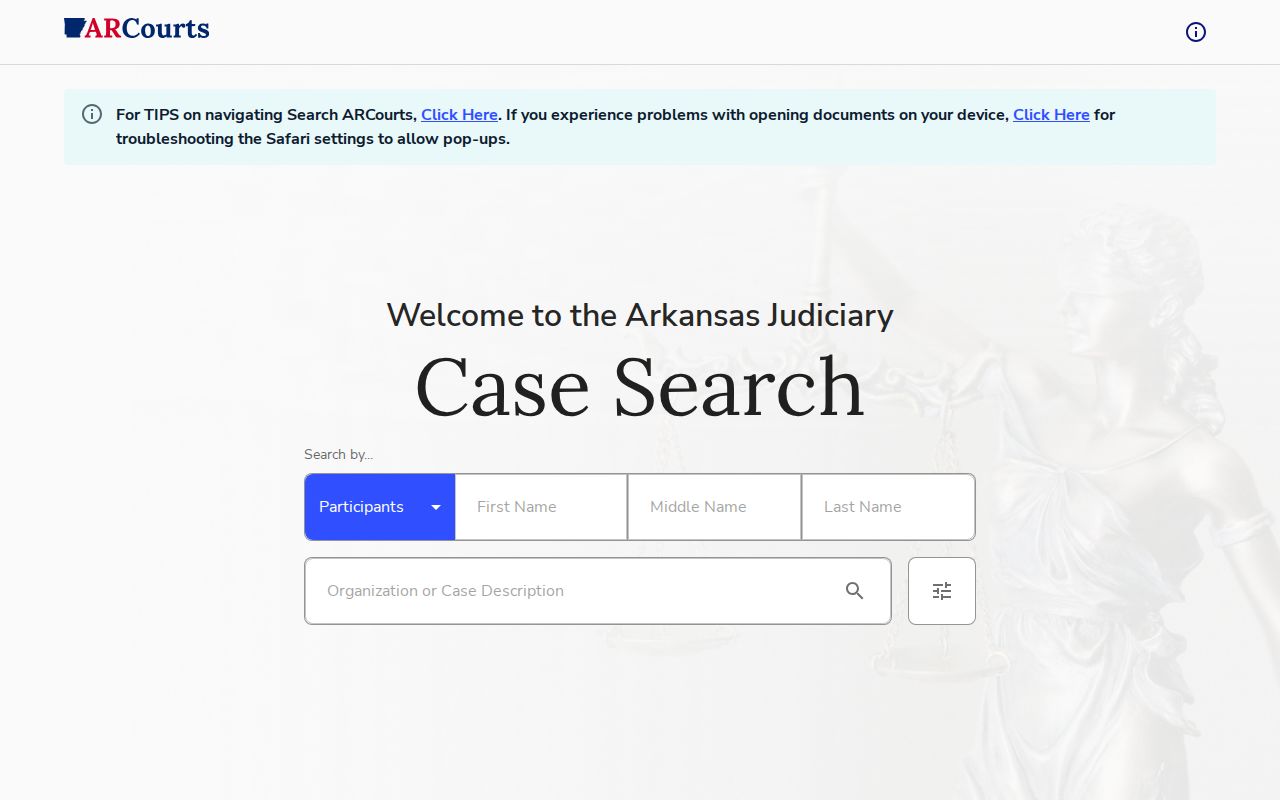
Not every case shows up online. Sealed, juvenile, adoption, and expunged material stays limited under court rules, so an empty remote result is not proof that nothing exists.
VoterView Verifies Little Rock Voters
VoterView answers one voter's question at a time. Arkansas VoterView asks for first name, last name, and date of birth, with county and ZIP fields to narrow a match. It is no street directory. The state excludes protected details under Arkansas election law. The VoterView screen explains why identity details are required before any search returns.
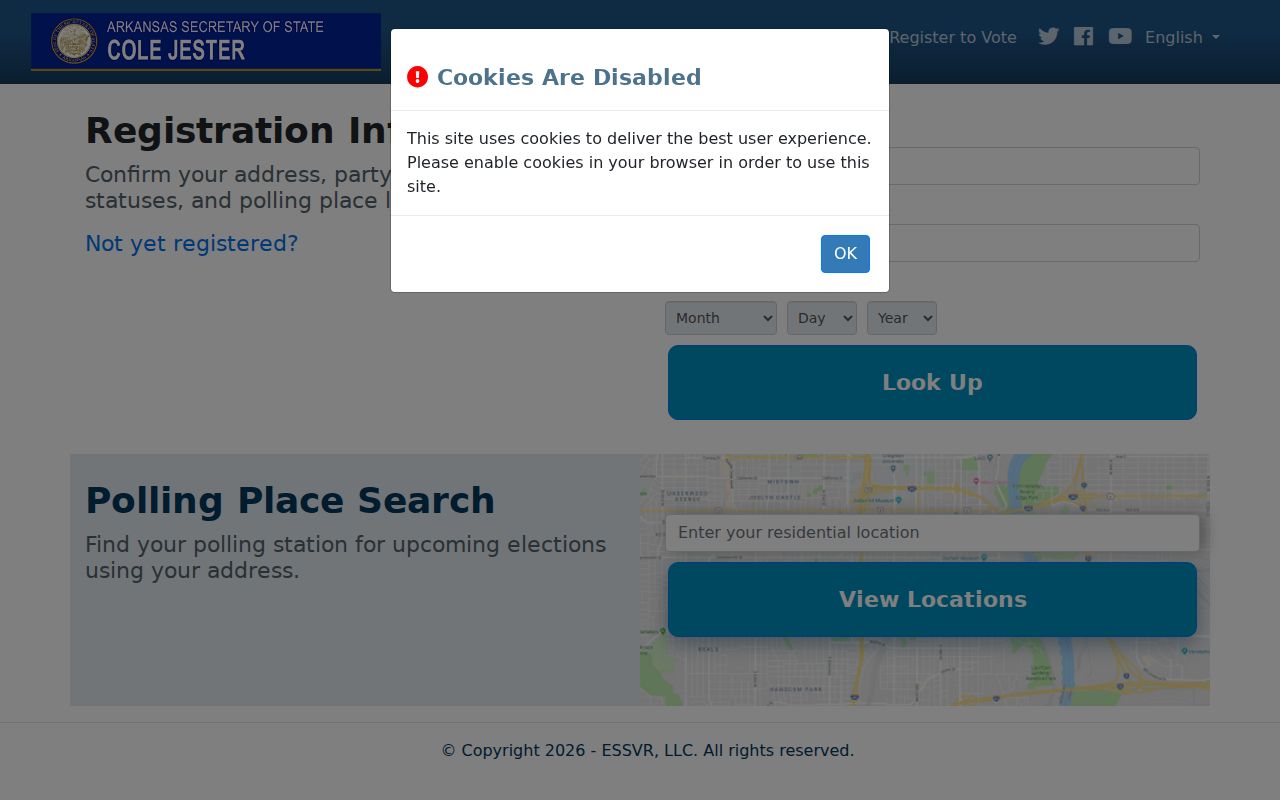
A VoterView hit confirms voter-registration facts alone. It is not a title record or a full household roster. It is not proof of continuous residence in Little Rock. Formal list access is governed by Arkansas Constitution Amendment 51 and Ark. Code §7-5-109. Ask the Pulaski County election office about a lawful request. Do not stretch VoterView into a street roll.
Defeat Little Rock Name Collisions
A bare name is the weakest residents directory clue. Strong matches pair two independent identifiers. Name plus parcel, spouse, middle initial, case year, business entity, or probate role will do. Property and deed records tie a name to land. Court dockets tie the same name to a role and a point in time. Directories and obituaries may hint at kinship, but check any secondary source against the official record before trusting it.
Match rule. Never merge two people because their names look alike. Keep conflicting addresses or dates visible until another record resolves them.
Heir searches should start with the decedent's probate case. Pull the heirs, fiduciary names, case number, and distribution documents from that file. Then chase the land. A later deed or recorded affidavit tied to the same legal description makes a chain far stronger than an unsourced people-search listing.
Historical Little Rock Directory Shelves
The Roberts Library Research Room is the main desk for Little Rock city directories, manuscript finding aids, Arkansas books, newspapers, microfilm, and on-site genealogy databases. Nineteenth-century directories and Polk volumes survive in irregular runs. Alphabetical sections lead with surnames. Reverse sections in later volumes lead with the street address, which makes them the tool for tracing past households. That address-first layout turns a city directory into a street directory for its decade. Start at the Roberts Library and Butler Center page.
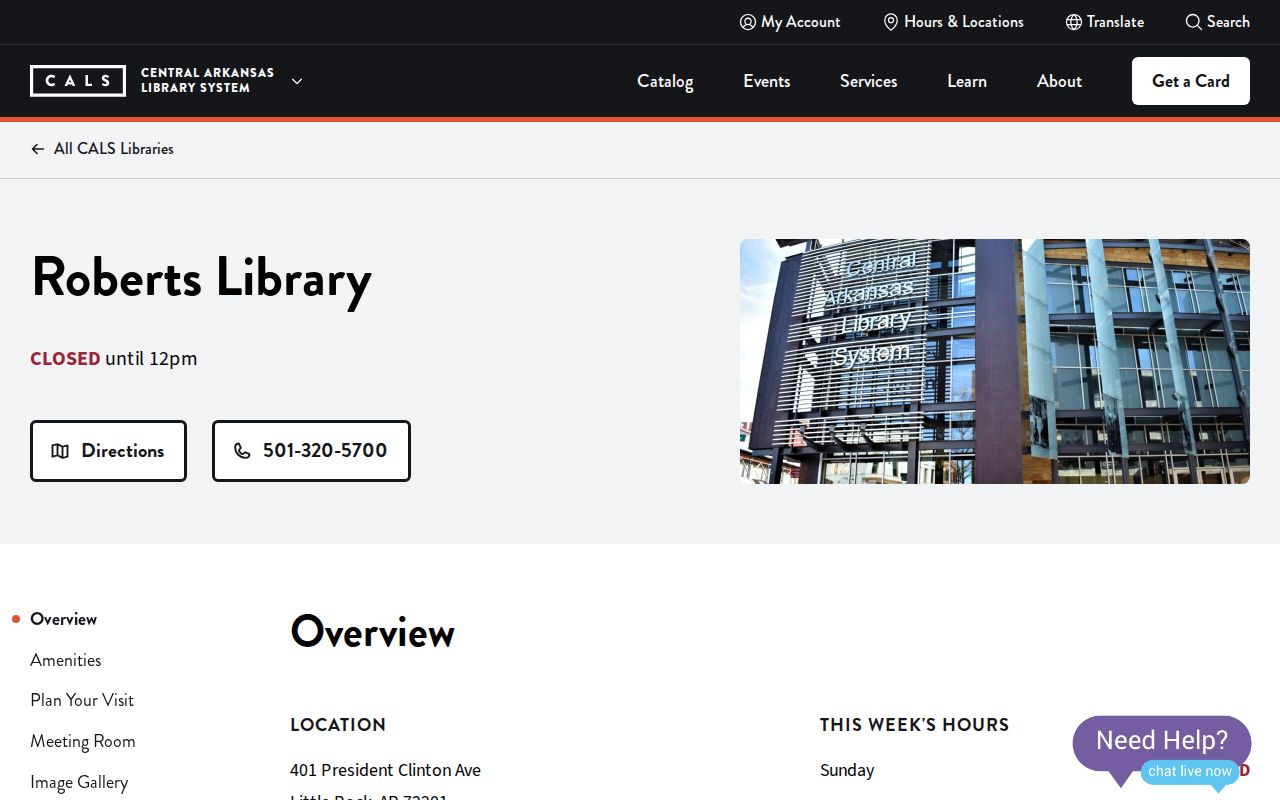
Call 501-320-5700 before traveling. Confirm the exact directory year and format you need. The library publishes no complete shelf list of surviving volumes, so no closed year range can be promised. The Little Rock city directory collections page unpacks the shelf and entry keys in depth.
Reconnect Through Little Rock Yearbooks
CALS digitized 100-plus local high-school yearbooks by 2022. That opens a lawful path to a former classmate, a club, a team, or a graduation year before any search of later public records. Old friends surface fast. The Butler Center's digital collections also hold photographs, maps, documents, and architectural material, while UALR's Center for Arkansas History and Culture shares the Roberts Library and adds manuscript and institutional holdings.
Search the Butler Center digital collections by school, surname, neighborhood, or date. Then check the image caption and the collection record. Yearbook names hide behind nicknames and initials. A later obituary, professional license, or public alumni item can bridge the gap, but consent and respectful contact still matter.
Library sources belong in a Little Rock residents directory. Current web indexes alone cannot replace that shelf.
Little Rock Vital Record Routes
Arkansas Vital Records holds statewide births and deaths from 1914, plus marriage and divorce coupons from 1917. The Little Rock counter is local. Access still runs under Ark. Code §20-18-305. Eligible requesters show identification, relationship or authority, purpose, and the current fee. Birth records open to the public after 100 years and death records after 50, subject to transfer and access practice.
Never mistake a coupon for the county file. A marriage coupon is a state statistical or certification record; Pulaski County holds the original license and return. A divorce coupon is not the circuit-court pleadings. Search ARCourts for case material. For other pleadings, contact the circuit clerk, and note that mail, counter, phone, and online ordering are documented channels, though genealogy requests may take extra work.
Little Rock GIS Reveals Change
The Little Rock GIS directory works like an index. Layer names expose parcels, permits, code enforcement, historic streets, neighborhoods, subdivisions, wards, and zoning. The 1943, 1960, and 1970 mosaics date visible change. Jurisdiction shows up too. The city GIS directory lists every layer, though a permit applicant or a mapped parcel is not automatic proof of residence.
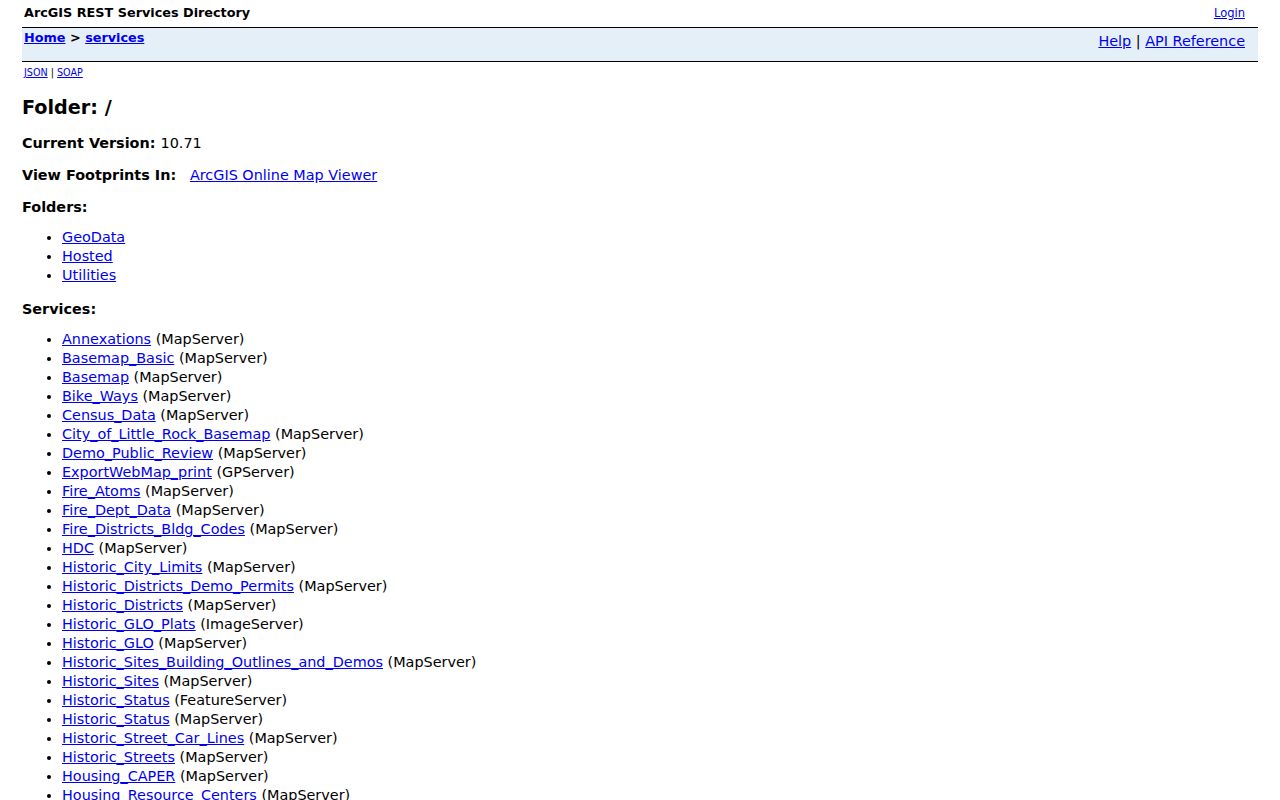
Older addresses need geography, not just names. Pulaski Heights joined Little Rock in 1916, Mabelvale-area land followed in 1973, and Pankey came in 1979, yet each parcel's legal description stayed stable while addresses shifted. Annexation reshapes the address, not the land record.
Read Little Rock Custody Records Carefully
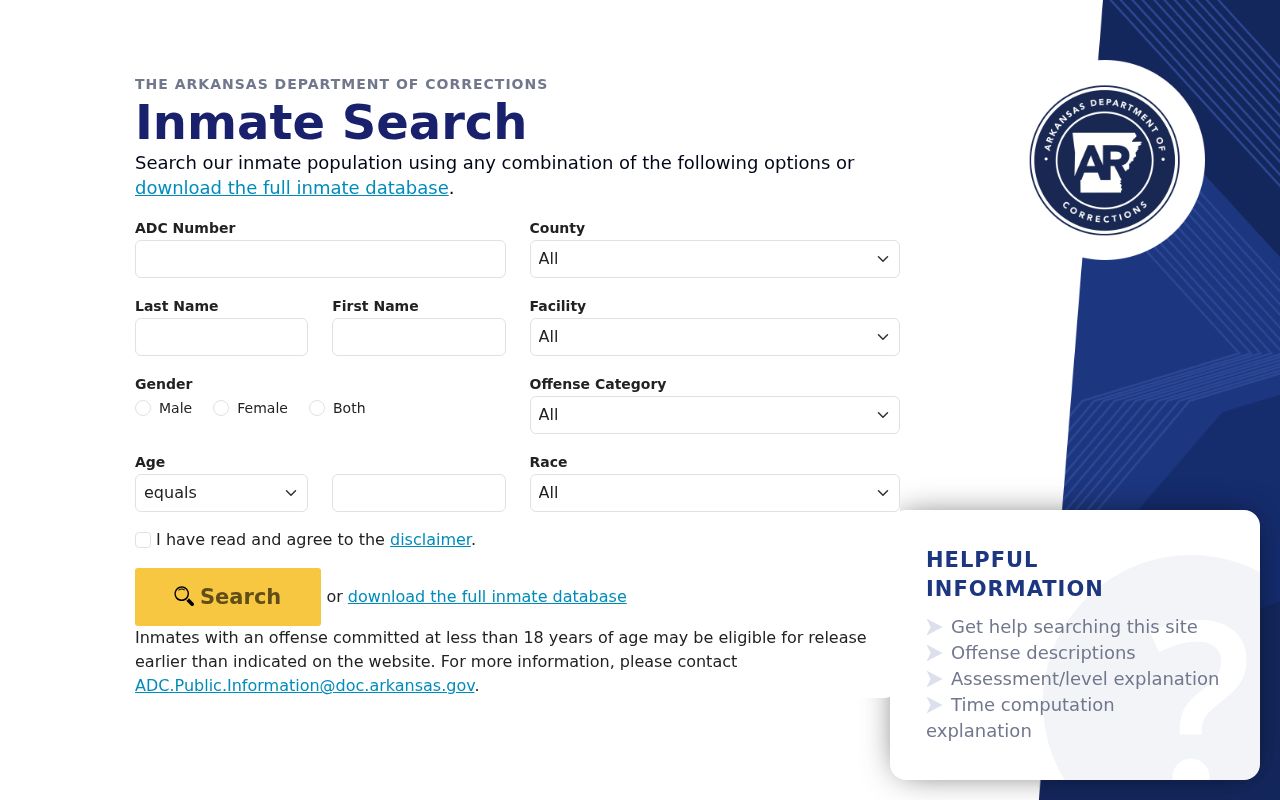
Two official tools cover custody in the Little Rock area. The Arkansas Division of Correction inmate search and the Pulaski County Sheriff's detention listings track people in custody, not the general population. Neither one gives a full criminal history. A listing may show an identifying number, custody location, status, sentence data, and release details where public. Check the status field and confirm identity first. The state inmate-search page shows one official route.
The ACIC offender registry serves public-safety notification under its own law and search rules.
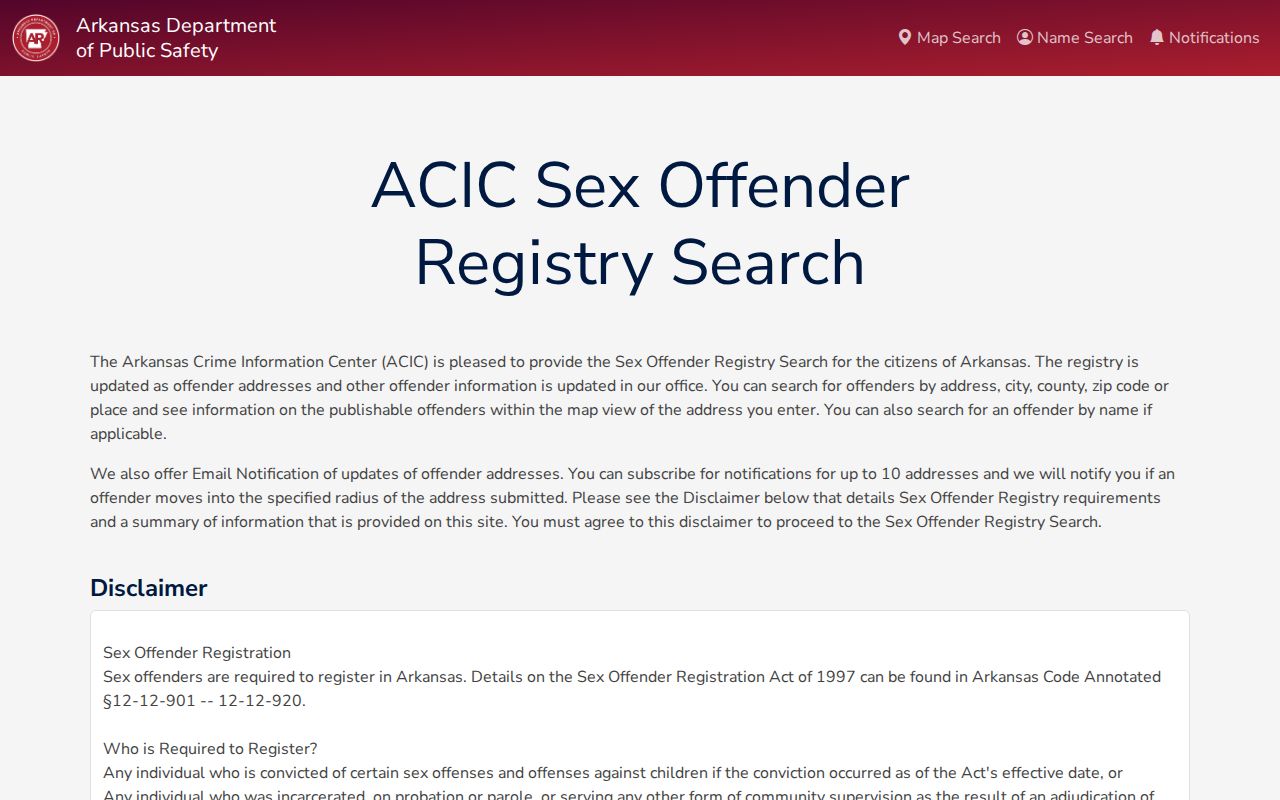
These two systems are not interchangeable tools. A custody entry and a registry notice carry different legal origins, dates, and meanings, so treating one as the other invites real mistakes.
Continue Little Rock Searches Offline
Online indexes run out eventually. When one does, switch channels. Ask the clerk whether an older book exists. Ask about a public terminal, a microfilm reel, or an archived file. The Roberts Library Research Room and the Arkansas State Archives hold historical materials. City permits and administrative files usually sit with the City Clerk or the department that created them. Describe the exact record you want.
Arkansas FOIA, Ark. Code §§25-19-101 through 111, is the broad fallback for public records. Name the record type, date span, department, and person or address in your request. State your preferred electronic format. If anything is withheld, ask for the legal basis and for any segregable public portions. Records in active use or storage generally must be certified. They must be available within three working days. FOIA cannot unseal cases or open restricted vital certificates. It cannot expose protected voter data or override driver privacy law.
Use Little Rock Records Lawfully
Official rolls beat commercial people-data sites for accountability. A custodian can explain coverage, fix an error, and issue a certified copy. Commercial tools blend stale public facts with marketing data and rarely show their sources. Treat them as clues, never final proof.
| Route | Strength | Limit |
|---|---|---|
| Official custodian | Defined record and correction path | Purpose-specific coverage |
| Library or archives | Historical context and staff help | Some sources require an onsite visit |
| Commercial compilation | May suggest a lead | Unknown freshness and mixed sources |
Lawful use only. Little Rock records do not grant permission to stalk, harass, threaten, trespass, or expose a protected address.
Arkansas law addresses stalking and harassment at Ark. Code §§5-71-208 and 5-71-229. Qualifying victims can enroll in the Arkansas Address Confidentiality Program. A Little Rock residents directory search should stop the moment contact would be unsafe, unwanted, or unlawful.